
Northeastern Masonry & Chimney: Premier Gas Fireplace Service in Ballston Lake, NY
Residents of Ballston Lake, NY know that our winters can be demanding, making a reliable heat source essential for both comfort and peace of mind. At Northeastern Masonry & Chimney, we provide specialized gas fireplace services designed to keep your home warmer and your heating appliances running as efficiently as possible. Whether you are transitioning from a traditional wood burner to a modern gas insert or need maintenance on an existing unit, our team brings extensive knowledge and a dedication to detail to every project. We understand that a gas fireplace is a significant investment in your home’s value and your family’s quality of life.
While gas appliances are often marketed for their convenience, they still require professional attention to operate safely. Our technicians are trained to identify potential hazards, optimize burner performance, and ensure that your venting system is functioning correctly. We treat every home in Ballston Lake with the respect it deserves, ensuring that our workspace is kept tidy and that you are fully informed about the condition of your system. From routine cleaning of pilot assemblies to complex troubleshooting of ignition issues, we are here to ensure your fireside experience is seamless.
Will My Gas Fireplace Work During a Power Outage?
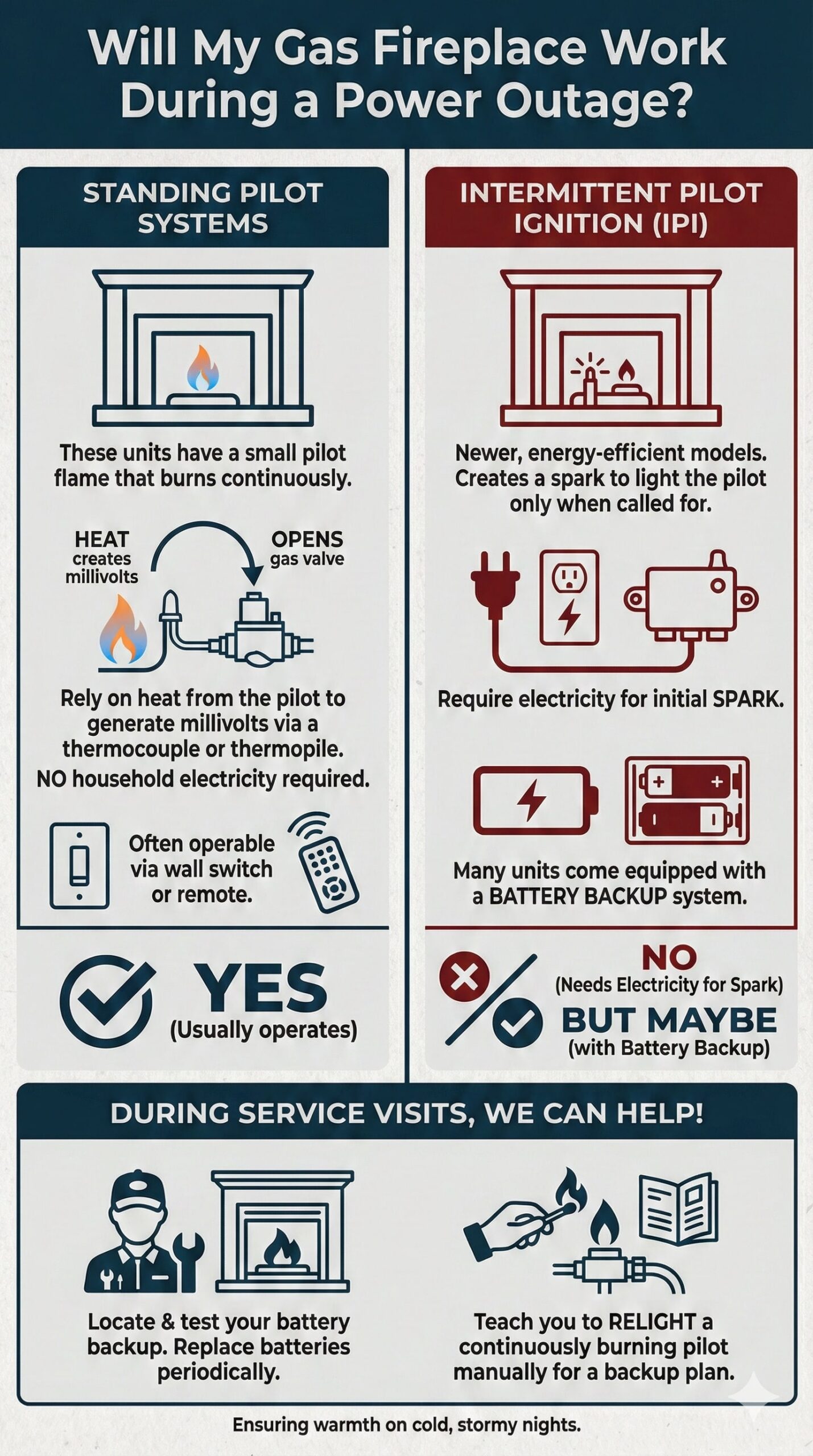
In Ballston Lake, winter storms can sometimes lead to power outages, leaving homeowners wondering if their gas fireplace can serve as an emergency heat source. The answer depends heavily on the specific ignition system your unit uses. Understanding the difference between standing pilot systems and intermittent pilot ignition (IPI) systems is key to knowing what to expect when the lights go out.
- Standing Pilot Systems: These units have a small pilot flame that burns continuously. Because they rely on the heat from the pilot to generate the millivolts needed to open the gas valve (via a thermocouple or thermopile), they often do not require household electricity to operate. You can usually turn these on using the wall switch or remote, even during a blackout.
- Intermittent Pilot Ignition (IPI): Newer, more energy-efficient models often use electronic ignition, which creates a spark to light the pilot only when you call for heat. These systems require electricity to generate that initial spark. However, many of these units come equipped with a battery backup system.
During our service visits, we can show you how to locate and test your battery backup. It is common for homeowners to forget that these batteries need to be replaced periodically. We recommend checking them every autumn. If your unit requires a continuously burning pilot, we can also teach you how to relight it manually if it ever goes out, ensuring you have a backup heating plan in place for those cold, stormy nights.
Why Does a Cloudy White Film Develop on the Glass? Can It Be Prevented?
One of the most frequent questions we receive from gas fireplace owners concerns the appearance of a foggy or white film on the inside of the glass viewing window. Many homeowners mistakenly assume this is just normal dust or soot, but it is actually a specific chemical byproduct of gas combustion. Natural gas and propane contain trace elements like sulfur and calcium. When these fuels burn, they release minerals that can bond to the glass surface as the unit heats up and cools down. Over time, this creates a hazy layer that obscures your view of the fire.
Leaving this film untreated can lead to permanent damage. If the residue is etched into the glass by repeated heating cycles, it becomes impossible to remove. To address this, we perform a specialized cleaning process during our maintenance visits:
- Specialized Cleaners: We use non-ammonia based cleaners specifically formulated for gas fireplace glass. Regular glass cleaners can leave streaks or react with the heat to cause further clouding.
- Cool Surface Cleaning: We ensure the glass is completely cool before applying any products to prevent thermal shock or chemical baking.
- Seal Inspection: While cleaning the glass, we also inspect the gasket seals around the window. A tight seal is critical for preventing dangerous exhaust gases like carbon monoxide from leaking into your living room.
Regular maintenance is the best way to manage this issue. By having us clean the glass annually, you prevent the mineral deposits from etching the surface, ensuring that your view of the flames remains crystal clear and your unit continues to look like new.
Serving the Beautiful Community of Ballston Lake, NY
Ballston Lake is a community that offers a perfect blend of lakeside serenity and historic charm. We love working here because the residents truly value the natural beauty and history that surrounds them. The hamlet is defined by the long, narrow lake itself, which is a geological marvel known as a “meromictic” lake. It provides a stunning backdrop for the homes in the area and a year-round playground for fishing and boating enthusiasts.
Locals often spend their weekends exploring the trails at the Ballston Veterans Bike Path or enjoying the open spaces at Jenkins Park. The area’s proximity to apple orchards makes it a favorite spot during the harvest season, and the sense of community is strong in neighborhoods where historic farmhouses sit alongside newer developments. Whether we are servicing a fireplace in a home near the historic Good Morning Farm or helping a family in a new build near the lake, we are proud to contribute to the comfort and safety of this vibrant New York community.
Is It Normal for Gas Logs to Develop Soot, or Does It Indicate a Problem?
While a small amount of soot can add a realistic “wood-burning” look to ceramic logs, excessive soot buildup on a gas fireplace is generally a sign of incomplete combustion. Unlike wood fires, where soot is a natural byproduct, gas fires should burn relatively cleanly. If you notice large black spots forming on the logs or soot depositing on the walls or ceiling above the fireplace, it indicates that the fuel-to-air ratio is imbalanced.
Several factors can contribute to this issue:
-
Misaligned Logs: Gas logs are designed to sit in a very specific arrangement to ensure flames do not impinge directly on the ceramic material. If the logs have been bumped or moved during cleaning, the flame path is disrupted, cooling the gas and creating soot.
-
Clogged Burner Ports: Dust, pet hair, or spider webs can block the small holes in the burner tube. This forces the gas out in irregular patterns, leading to a “lazy” yellow flame that produces more soot than a crisp blue-yellow flame.
-
Air Shutter Adjustment: The air shutter controls how much oxygen mixes with the gas. If it is too closed, the flame becomes oxygen-starved and sooty.
We address soot issues by carefully cleaning the logs and burner assembly. We then reset the logs to the manufacturer’s exact specifications and adjust the air shutter to achieve the optimal burn. This not only reduces soot but also ensures the fireplace generates heat as efficiently as possible and prevents carbon monoxide levels from rising.
Why Does My Fireplace Have a Strange Odor When I Turn It On in the Fall?
It is a common scenario: the first cold snap of the year arrives, you switch on your gas fireplace, and suddenly the room is filled with a distinct, somewhat unpleasant odor. For many homeowners, this causes immediate panic about a potential gas leak. While you should always be cautious, this specific “start-up smell” is often due to dust and particulate matter that has settled on the burner and logs during the off-season.
When the unit heats up after months of inactivity, that layer of household dust, pet dander, and lint burns off, creating an acrid smell. This is usually harmless and should dissipate within a few hours of use. However, there are other odors that require professional attention:
-
Rotten Egg Smell: This is the telltale scent of mercaptan, the additive put in natural gas. If you smell this, you should evacuate the home and call your utility company or emergency services immediately.
-
Sharp, Chemical Odors: If the smell persists past the initial burn-off, it could indicate that plastic wiring or other non-heat-resistant materials have fallen near the firebox, or that the unit is running too hot.
-
Damp or Musty Smells: This can indicate a venting issue where moisture is entering the chimney or vent pipe, potentially bringing in mold or mildew spores.
We recommend a pre-season inspection to mitigate these odors. We clean the heating element and burner thoroughly before you light it for the first time, minimizing that burning dust smell. We also perform a leak detection test to ensure that any odor you notice is not related to a gas line compromise, giving you peace of mind as you head into winter.
Do Ceramic Logs and Components Wear Out, or Are They Permanent?
Gas fireplaces are durable, but the internal components are subjected to extreme temperature fluctuations that eventually take a toll. Many homeowners are surprised to learn that the ceramic logs and the delicate sensors inside the firebox are consumable parts that may need replacement over the lifespan of the unit. The logs are typically made from ceramic fiber or refractory cement, materials chosen for their heat resistance, but they are not indestructible.
Over years of heating and cooling, these logs can become brittle.
-
Cracking and Crumbling: Small hairline cracks can develop, eventually leading to pieces of the log breaking off. If these debris fall onto the burner, they can block gas ports or damage the ignition assembly.
-
Fading Colors: The high heat can eventually bleach the color out of the logs, making them look less realistic.
-
Sensor Degradation: The thermocouple and thermopile—the sensors that detect the flame and control gas flow—are constantly bathed in fire. Over time, they can wear out and fail to generate the voltage needed to keep the gas valve open, causing the pilot light to drop out repeatedly.
During our service calls, we inspect the condition of your media (logs, stones, or glass) and the health of your sensors. If we see signs of significant deterioration, we can recommend replacements. Swapping out old, faded logs for a new set can surprisingly refresh the look of your entire room, while replacing an aging thermocouple can prevent mid-winter heating failures.
Why Does My Pilot Light Go Out on Windy Days?
If you notice that your pilot light tends to extinguish during the blustery storms that frequent Ballston Lake, the issue often lies with the venting termination. Direct-vent gas fireplaces pull fresh air from outside and exhaust fumes through a coaxial pipe system. While this is an efficient design, the termination cap on the exterior of your home is exposed to the elements.
High winds can create pressure imbalances that disrupt the flame.
-
Downdrafts: Strong gusts can push air back down the vent pipe with enough force to blow out the small pilot flame.
-
Vent Cap Issues: If the vent cap is damaged, missing, or not designed for high-wind areas, it offers little protection against gusts.
-
Seal Failures: If the glass front of the fireplace is not sealed tightly, wind pressure from outside can push through the unit, creating turbulence in the firebox that destabilizes the pilot.
We troubleshoot wind-related issues by inspecting the exterior vent termination to ensure it is secure and undamaged. In some cases, we may recommend installing a wind shield or a specialized high-wind termination cap designed to deflect gusts. We also check the internal draft of the unit to ensure that the flame is robust enough to withstand minor pressure changes. Our goal is to make your heating system resilient against the weather, so you can enjoy a steady fire even when the wind is howling outside.
Trust Northeastern Masonry & Chimney for Your Gas Fireplace Needs
At Northeastern Masonry & Chimney, we are dedicated to providing the residents of Ballston Lake, NY with service that combines technical expertise with genuine care for your home. We know that a gas fireplace is the heart of the home during our long winters, and we are committed to keeping yours running reliably.
Do not wait until the first snowstorm to check on your heating appliance. Whether you suspect a sensor issue, need a glass cleaning, or simply want to schedule your annual maintenance, our team is ready to help with gas fireplace services near you.